
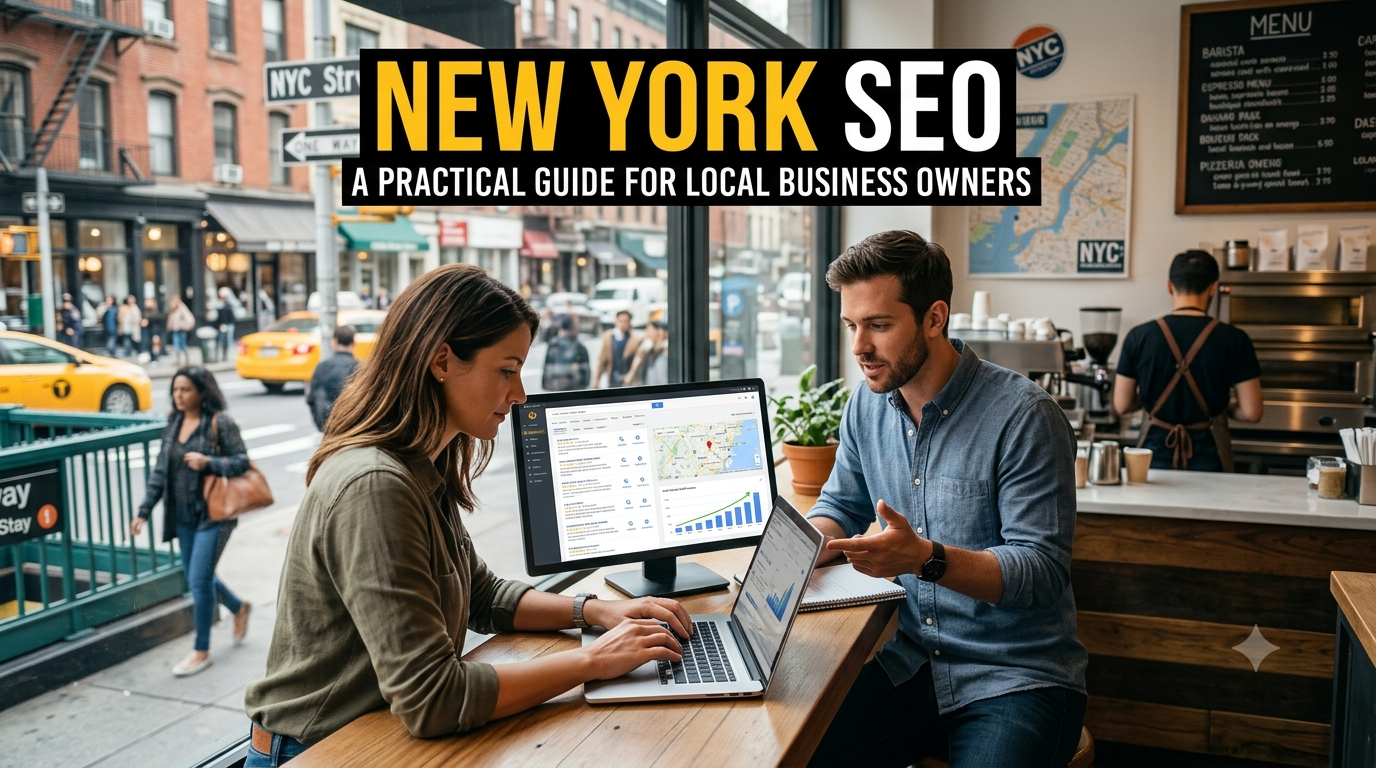
Running a business in New York means competing in one of the most diverse and digitally competitive markets in the United States. Whether you operate a restaurant in Manhattan, a professional service company in Brooklyn, a retail store in Queens, or a local service business in the Bronx or Staten Island, getting found online can have a direct impact on your ability to attract customers.
This is where New York SEO becomes important.
Local search engine optimization helps businesses improve their visibility when people search online for products, services, and businesses in their area. Instead of relying only on traditional advertising, a well-planned SEO strategy can help your business appear in relevant search results and connect with customers who are actively looking for what you offer.
This practical guide explains the fundamentals of New York SEO and how local business owners can build a stronger online presence.
What Is New York SEO?
New York SEO refers to search engine optimization strategies designed to improve a business’s visibility for relevant searches connected to New York locations.
For example, a customer might search for:
- “best coffee shop in Brooklyn”
- “plumber near Manhattan”
- “digital marketing agency in New York”
- “dentist in Queens”
- “Italian restaurant near me”
- “accountant in Bronx”
These searches often indicate strong local intent. Businesses that optimize their websites, local profiles, content, and online presence can improve their chances of appearing when potential customers perform these searches.
Why Local SEO Matters in New York
New York has a huge population and a highly competitive business environment. Customers have many options, and they often use search engines to compare businesses before making a decision.
Local SEO can help businesses:
- Increase visibility in local searches
- Attract potential customers from nearby areas
- Generate qualified website traffic
- Increase calls and inquiries
- Improve online credibility
- Build stronger brand awareness
- Support long-term organic growth
The objective isn’t simply to generate more website visitors. The goal is to attract people who are genuinely interested in your products or services.
Start With Google Business Profile Optimization
For many local businesses, a Google Business Profile is one of the most important elements of a local SEO strategy.
Your profile should contain accurate and consistent information, including:
- Business name
- Address
- Phone number
- Website
- Business category
- Opening hours
- Services
- Products
- Photos
- Business description
Keep the information updated whenever something changes.
Businesses should also monitor customer reviews and respond professionally to relevant feedback.
A complete and well-maintained profile provides search engines and customers with useful information about your business.
Choose the Right Local Keywords
Keyword research is another important part of New York SEO.
Instead of targeting only broad terms such as “lawyer” or “restaurant,” local businesses can focus on more specific searches.
For example:
Broad keyword:
“SEO agency”
Local keyword:
“SEO agency in New York”
More specific keyword:
“local SEO agency in Brooklyn”
The right keywords depend on your business, services, customers, and location.
Consider creating keyword groups around:
- Your primary service
- Your location
- Specific neighborhoods
- Customer needs
- Service-related questions
- Commercial search terms
Avoid forcing location keywords into every sentence. Content should remain natural and useful to readers.
Create Location-Specific Website Pages
Businesses serving multiple areas may benefit from dedicated location pages.
For example, a New York service company might create pages for:
- Manhattan
- Brooklyn
- Queens
- Bronx
- Staten Island
However, each page should contain genuinely useful information about the location.
Simply changing the city name on identical pages can create low-value content. Instead, include relevant information about services, customers, neighborhoods, local considerations, and frequently asked questions.
Optimize Your Website for Local Search
Your website should clearly communicate what your business does and where it operates.
Important on-page SEO elements include:
Page Titles
Include the primary service and location where appropriate.
For example:
“Residential Cleaning Services in Brooklyn | Company Name”
Meta Descriptions
Write concise descriptions that explain what the page offers and why it is relevant.
Headings
Use clear H1, H2, and H3 headings to organize information.
Content
Create useful content that addresses customer questions and demonstrates your knowledge.
Internal Links
Connect related service and location pages so visitors and search engines can navigate your website more easily.
Images
Use relevant images with descriptive file names and appropriate alt text.
Build Locally Relevant Content
Local content can help businesses demonstrate relevance to their target audience.
Instead of publishing generic articles, consider creating content related to your customers’ actual questions and needs.
For example:
- “How to Choose a Moving Company in New York”
- “Common HVAC Problems in New York Homes”
- “A Guide to Choosing a Brooklyn Restaurant for Events”
- “Things to Consider Before Hiring a New York Accountant”
- “How Small Businesses Can Improve Their Local Online Presence”
The best local content provides useful information rather than simply repeating keywords.
Manage Online Reviews
Reviews can influence how potential customers perceive a local business.
Encourage satisfied customers to share honest feedback through appropriate review platforms. When customers leave reviews, respond professionally and consistently.
For negative reviews, avoid aggressive responses. Instead, acknowledge the concern where appropriate and provide a practical way to resolve the issue.
Reviews can also reveal recurring customer concerns and help businesses identify areas where their products or services can improve.
Maintain Consistent Business Information
Your business name, address, phone number, and other important information should be accurate across online platforms.
Inconsistent information can create confusion for customers and make it harder for search engines to understand your business.
Check important directories, social profiles, industry websites, and other platforms where your business is listed.
If your business moves, changes its phone number, or updates its operating hours, review your online listings and update them accordingly.
Build Quality Local Links
Links from relevant and reputable websites can contribute to your site’s authority.
For a New York business, useful opportunities may include:
- Local business organizations
- Industry associations
- Community websites
- Local publications
- Business directories
- Event organizations
- Relevant partnerships
- Local sponsorships
The focus should be on earning relevant, legitimate links rather than purchasing large numbers of low-quality links.
Quality and relevance are generally more valuable than quantity.
Optimize for Mobile Users
A large portion of local searches take place on mobile devices.
Your website should provide a smooth experience on smartphones and tablets.
Check that:
- Pages load quickly
- Text is easy to read
- Buttons are easy to tap
- Contact information is easy to find
- Navigation is simple
- Forms work correctly
- Important pages don’t contain unnecessary elements
A potential customer should be able to quickly understand what your business offers and how to contact you.
Improve Website Speed and Technical SEO
Technical SEO provides the foundation for search visibility.
Important areas include:
- Website speed
- Mobile usability
- HTTPS security
- Crawlability
- Indexing
- XML sitemap
- Broken links
- Canonical URLs
- Structured data
- Page structure
Regular technical audits can help identify problems that may prevent search engines from properly accessing or understanding your website.
Use Local Business Schema
Structured data can provide search engines with additional information about a business.
Depending on the organization, relevant structured data may include information such as:
- Business name
- Address
- Phone number
- Website
- Opening hours
- Services
- Location
Schema markup should accurately represent information visible on the website and should be implemented correctly.
Don’t Ignore Voice and Conversational Searches
People increasingly use conversational language when searching online, especially when using mobile devices and voice assistants.
Instead of searching only for:
“plumber New York”
someone might ask:
“Who can fix a leaking pipe near me?”
Creating content that answers natural-language questions can help businesses address these types of searches.
Useful FAQ sections can cover:
- Services
- Pricing factors
- Service areas
- Opening hours
- Booking processes
- Common customer questions
Track Your SEO Performance
SEO requires ongoing measurement.
Important metrics to monitor include:
- Organic traffic
- Local search visibility
- Website conversions
- Phone calls
- Form submissions
- Keyword performance
- Google Business Profile interactions
- Search impressions
- Click-through rates
Don’t focus exclusively on rankings.
A keyword ranking higher in search results is useful only if it contributes to meaningful business outcomes.
For example, an increase in qualified calls or appointment requests may be more valuable than a small increase in traffic.
Common New York SEO Mistakes
Local businesses often make several SEO mistakes.
Targeting Only Broad Keywords
Trying to rank for extremely competitive keywords may consume significant resources without generating enough relevant customers.
Creating Duplicate Location Pages
Creating dozens of nearly identical pages with different city names can result in poor-quality content.
Ignoring Reviews
Customer reviews are an important part of the local search ecosystem and customer decision-making process.
Neglecting Mobile Experience
A website that works poorly on smartphones can lose potential customers.
Buying Low-Quality Links
Large quantities of irrelevant or manipulative links can create unnecessary SEO risks.
Publishing Content Without a Strategy
Publishing random articles doesn’t necessarily produce useful organic traffic. Content should address genuine customer needs.
Forgetting About Conversions
SEO traffic is only one part of the marketing process. Your website should make it easy for visitors to call, contact, book, or purchase.
How Long Does New York SEO Take?
SEO results can vary significantly depending on factors such as competition, website history, industry, location, content quality, technical condition, and authority.
Businesses should generally approach SEO as a long-term marketing strategy rather than expecting immediate results.
A practical SEO process may involve:
Phase 1: Research and Audit
Analyze the website, competitors, keywords, technical SEO, local listings, and existing content.
Phase 2: Optimization
Improve website structure, important pages, local profiles, technical elements, and on-page content.
Phase 3: Content Development
Create useful service pages, location pages, FAQs, guides, and other relevant resources.
Phase 4: Authority Building
Develop legitimate local relationships, citations, digital PR opportunities, and relevant backlinks.
Phase 5: Measurement and Improvement
Monitor performance and continually improve pages based on data and customer behavior.
Build an SEO Strategy Around Your Customers
The most effective local SEO strategies start with customer intent.
Think about what your potential customers want to know before contacting your business.
Ask:
- What problem are they trying to solve?
- What information do they need?
- What locations do they search for?
- What concerns prevent them from making a purchase?
- What questions do they ask before contacting a business?
- What makes your service different?
Use the answers to build your website and content strategy.
Final Thoughts
New York SEO is not simply about adding “New York” to a website or trying to rank for a few keywords. It is a comprehensive strategy involving local business information, website optimization, useful content, technical SEO, reviews, relevant links, mobile experience, and ongoing measurement.
For local business owners, the most sustainable approach is to focus on providing accurate information and useful experiences for customers while building a website that search engines can understand.
Whether your business operates in Manhattan, Brooklyn, Queens, the Bronx, Staten Island, or another part of the New York market, a well-planned local SEO strategy can help improve your online visibility and create more opportunities to connect with potential customers.